In industries where precision and accuracy are paramount, dosing pumps and metering pumps stand out as essential tools. These pumps are vital in ensuring that liquids and chemicals are delivered in exact measurements, ensuring safety and efficiency in processes. But what exactly are dosing pumps, and why are they so important?
What Are Dosing Pumps?
Dosing pump, often referred to as metering pumps, are designed to inject a precise flow of a chemical or substance into water, steam, or gas. Their primary function is to ensure that the exact required amount of a chemical is added to a process at the right time. This task is critical in industries like water treatment, food processing, pharmaceuticals, and petrochemicals where exact chemical control is required.
How Do Dosing Pumps Work?
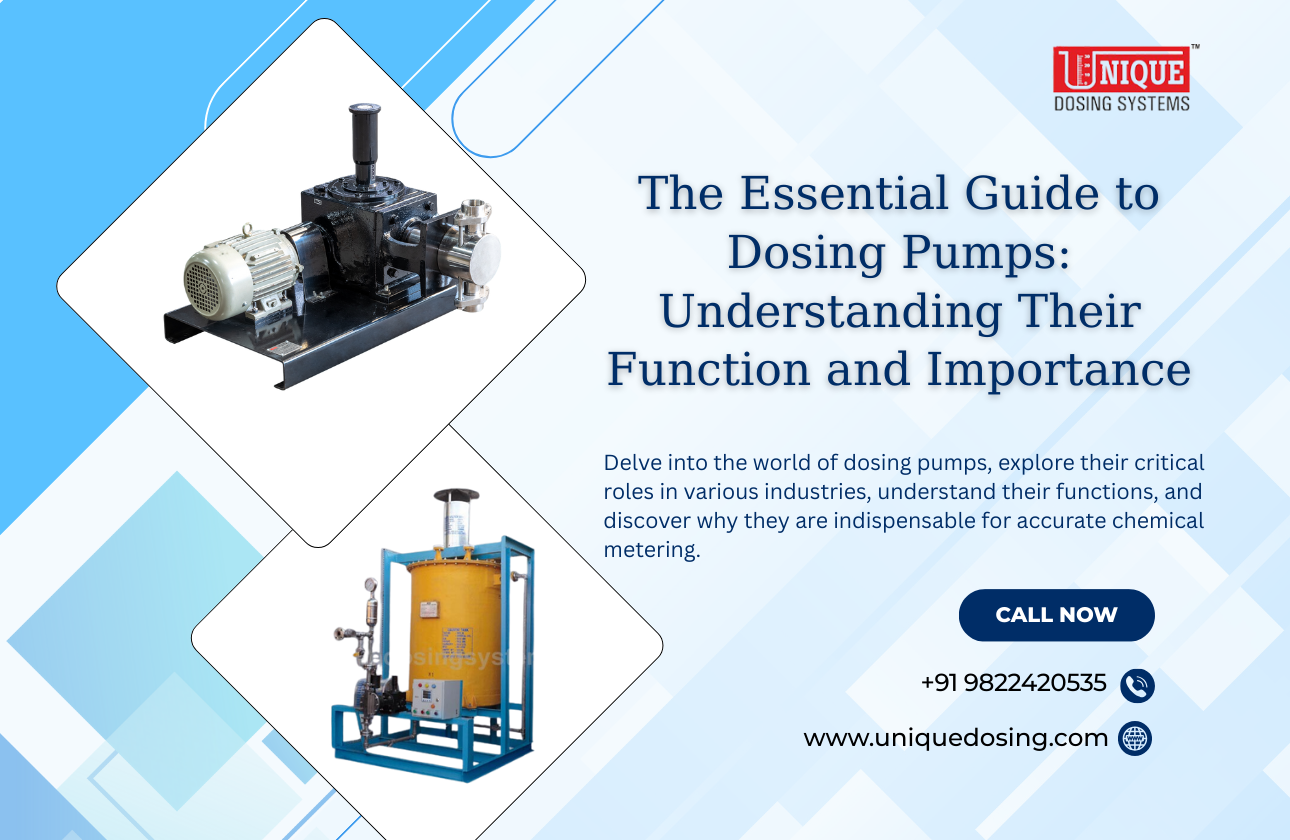
Dosing pumps work by a simple yet precise mechanism: they are generally based on a positive displacement pump principle, driven by an electric motor or air actuator. The mechanism ensures that a specified amount of chemical flows into the system regardless of the back pressure that might exist. Metering pump typically consist of a pump head, a motor, and a control system which accurately manages the flow rate.
Types of Dosing Pumps
There are several types of dosing pumps available, including diaphragm pumps, peristaltic pumps, and piston pumping systems. Each serves specific applications:
- Diaphragm Dosing Pumps: Ideal for low-pressure dosing and are common in water treatment and chemical processing industries.
- Peristaltic Pumps: Best suited for handling corrosive chemicals as the chemical does not come into contact with any moving parts except the tubing.
- Piston Pumps: Suitable for high-pressure applications, often used where precise dosing of viscous liquids is necessary.
Advantages of Using Metering Pumps
The use of dosing pumps offers several advantages:
- Precision: Provides accurate control over the amount of chemical substance being used, minimizing waste and optimizing resource use.
- Versatility: Compatible with a wide range of chemicals and fluids, making them applicable across multiple industries.
- Automation Friendly: Easily integrates with automated systems, allowing for seamless operation without constant human intervention.
- Safety: By ensuring precise dosing, they limit the risk of over-dosing or chemical spills which can lead to dangerous situations.
Applications of Dosing Pumps
Dosing pumps play a crucial role in many applications:
- Water Treatment: Used to inject chlorine or other treatment chemicals into the water supply.
- Food and Beverage: Ensures the precise mixing of ingredients such as flavorings, colorings, and preservatives.
- Pharmaceuticals: Delivering accurate dosing of chemicals in drug manufacturing processes.
- Petrochemicals: Managing the precise injection of additives and other components.
As industrial processes become more complex and the demand for accuracy escalates, dosing pumps will continue to be an indispensable part of the operational landscape. Their ability to provide exact dosing guarantees efficiency and safety across numerous applications, making them a critical component in modern industry.