
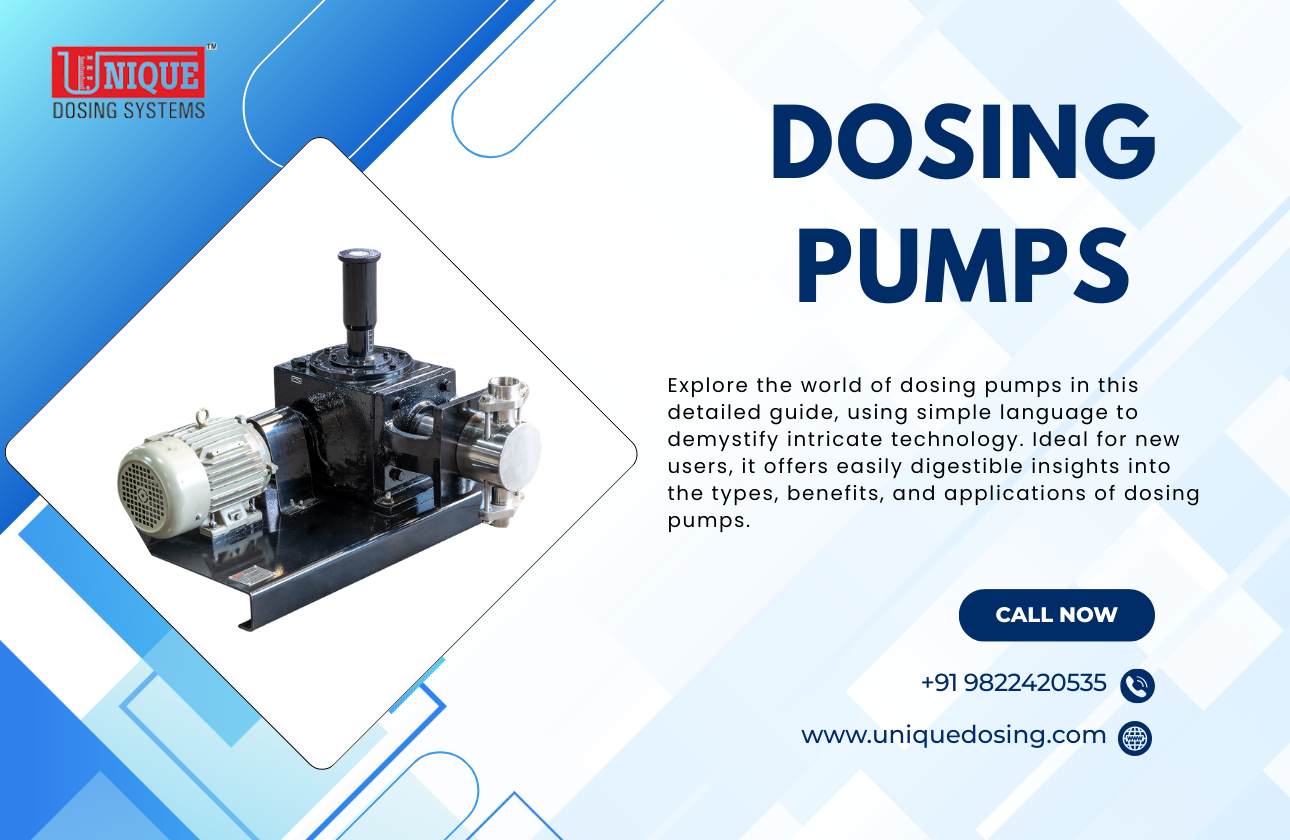
What is a Dosing Pump?
A dosing pump is a small, positive displacement pump used to inject precise amounts of a chemical or other substances into a fluid stream. These pumps are vital in industries such as water treatment, food and beverage, and pharmaceuticals, where consistent chemical dosing is crucial.
How Does a Dosing Pump Work?
Dosing pumps operate by drawing a fixed volume of fluid into a chamber through an inlet valve and then displacing it through an outlet valve. This process involves a diaphragm, piston, or gear mechanism which ensures accuracy and precision in dispensing fluids.
Benefits of Using Dosing Pumps
One primary benefit of using a dosing pump is its ability to provide accurate, consistent chemical delivery, reducing waste and ensuring optimal chemical reactions. It also offers flexibility, as it can handle a range of viscosities and handle corrosive or hazardous substances safely.
Applications of Dosing Pumps
Dosing pumps see extensive application across multiple industries. In water treatment plants, they help maintain the pH levels by adding precise chemicals. The food and beverage industry uses them to inject flavors, while the pharmaceutical industry relies on them for consistent, safe dosing of medications.
Choosing the Right Dosing Pump
Selecting the appropriate dosing pump involves considering factors like the type of chemical being pumped, the required flow rate, and the viscosity of the fluid. It's crucial to also look into the pump's compatibility with the specific application to ensure reliability and efficiency.
Frequently Asked Questions
1. How do I maintain a dosing pump?
Answer: Regular maintenance of a dosing pump involves checking seals and diaphragms for wear and ensuring valves are clean and not blocked. Regular calibration according to the manufacturer's guidelines also helps in maintaining efficiency.
2. Can dosing pumps handle corrosive fluids?
Answer: Yes, many dosing pumps are designed to handle corrosive fluids. It's essential to choose a pump made from materials that can withstand the specific chemical properties of your application.
3. Are there different types of dosing pumps?
Answer: Yes, dosing pumps vary based on the mechanism they use, such as diaphragm, piston, and peristaltic pumps. Each type is suited for different applications based on fluid properties and required precision.
4. Can a dosing pump help in water purification?
Answer: Absolutely. In water treatment, dosing pumps add necessary chemicals to purify and balance water, making them essential in maintaining water quality.
5. What factors affect the choice of a dosing pump?
Answer: Key factors include the type and nature of the fluid, required flow rate, operating environment, and compatibility with existing equipment. These factors guide selecting a pump that best suits your needs.