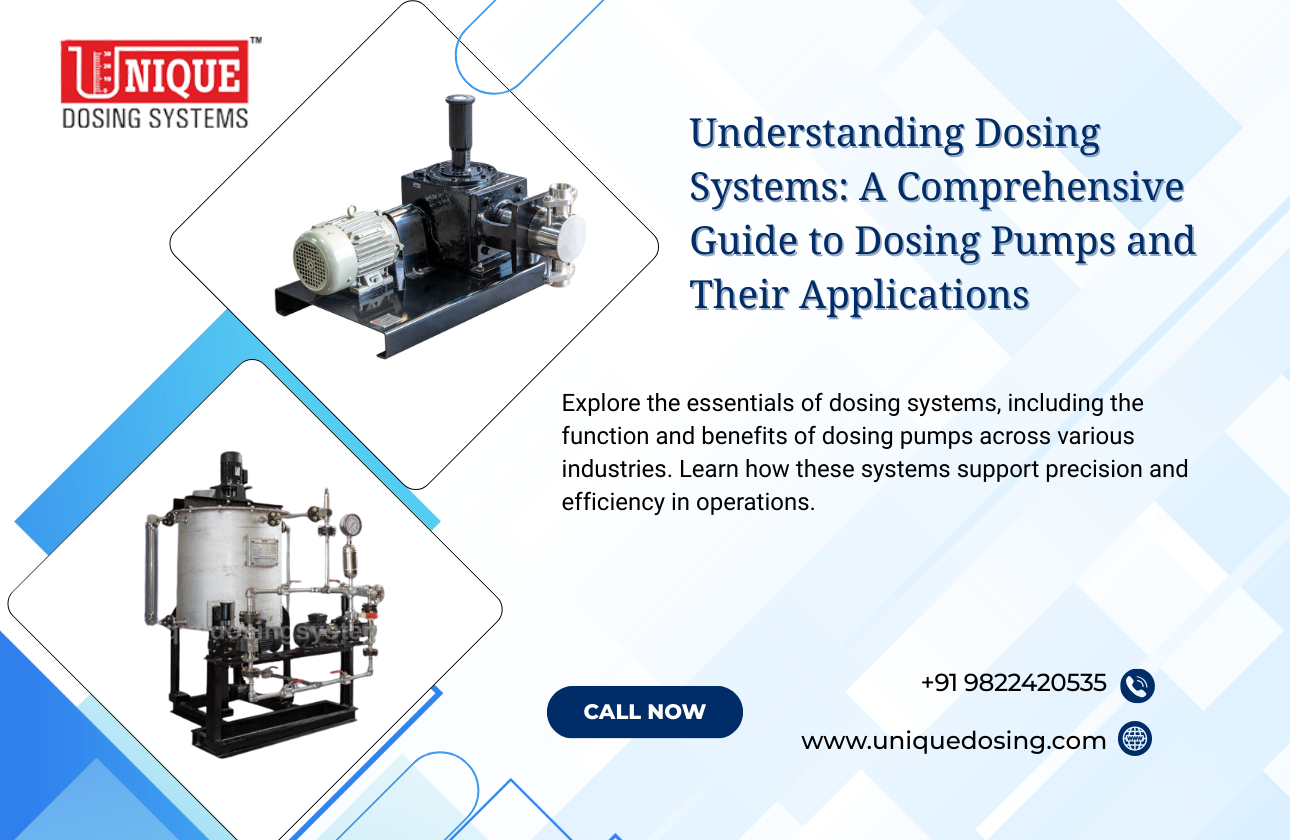
In today’s precision-driven industries, the demand for accurate chemical handling and dispensing has never been higher. Dosing systems play a crucial role in a wide range of applications, from water treatment facilities to pharmaceutical manufacturing. This blog post aims to shed light on the essentials of dosing systems and dosing pumps, detailing their significance and benefits across various sectors.
What is a Dosing System?
A dosing system is a set of components designed to deliver controlled amounts of a chemical substance into a process stream. The primary objective is to ensure accuracy and consistency in the dispensing process, which is vital for maintaining product quality and optimizing efficiency.
The Role of Dosing Pumps
Dosing pumps are the heartbeat of any dosing system. They are specialized small pumps with the ability to dose a precise flow rate of a chemical or substance into a production line or system. These pumps are instrumental in applications where precision is paramount, ensuring that chemical reactions occur at optimal conditions, thereby preventing wasted resources and potential safety hazards.
Applications of Dosing Systems
Dosing systems find usage across a myriad of industries. Here are some notable applications:
- Water Treatment: Dosing systems are used to add chemicals such as chlorine and fluoride to water, ensuring safe and potable water for public supply.
- Food and Beverage: Ensuring the right amount of ingredient addition for quality control and flavor consistency in everything from soft drinks to packaged foods.
- Pharmaceuticals: Accurate dosing is critical in drug formulation processes to uphold the safety and efficacy of pharmaceutical products.
- Agriculture: Dosing systems are employed for the distribution of fertilizers and pest control substances, improving yields and sustainability.
Benefits of Using Dosing Systems
Dosing systems provide numerous advantages, including:
- Accuracy: Ensures precise chemical metering, reducing waste and minimizing the risk of errors.
- Efficiency: Automates the dosing process, saving time and reducing labor costs.
- Flexibility: Can be customized to handle a variety of chemicals and liquids, adapting to specific industry needs.
- Safety: Minimizes human interaction with hazardous chemicals, enhancing workplace safety.
Conclusion
As industries continue to innovate and demand higher levels of precision, the importance of efficient dosing systems will only grow. Whether it's ensuring safe drinking water or maintaining consistency in pharmaceutical products, dosing pumps play an integral role. By investing in reliable and advanced dosing systems, companies can safeguard their operations and enhance productivity.
In summary, understanding the function and capacity of dosing pumps within a dosing system can lead to significant improvements in accuracy, efficiency, and overall operational performance. As such, businesses looking to streamline processes should consider integrating these systems into their workflow.
Published on December 5, 2025 by Admin