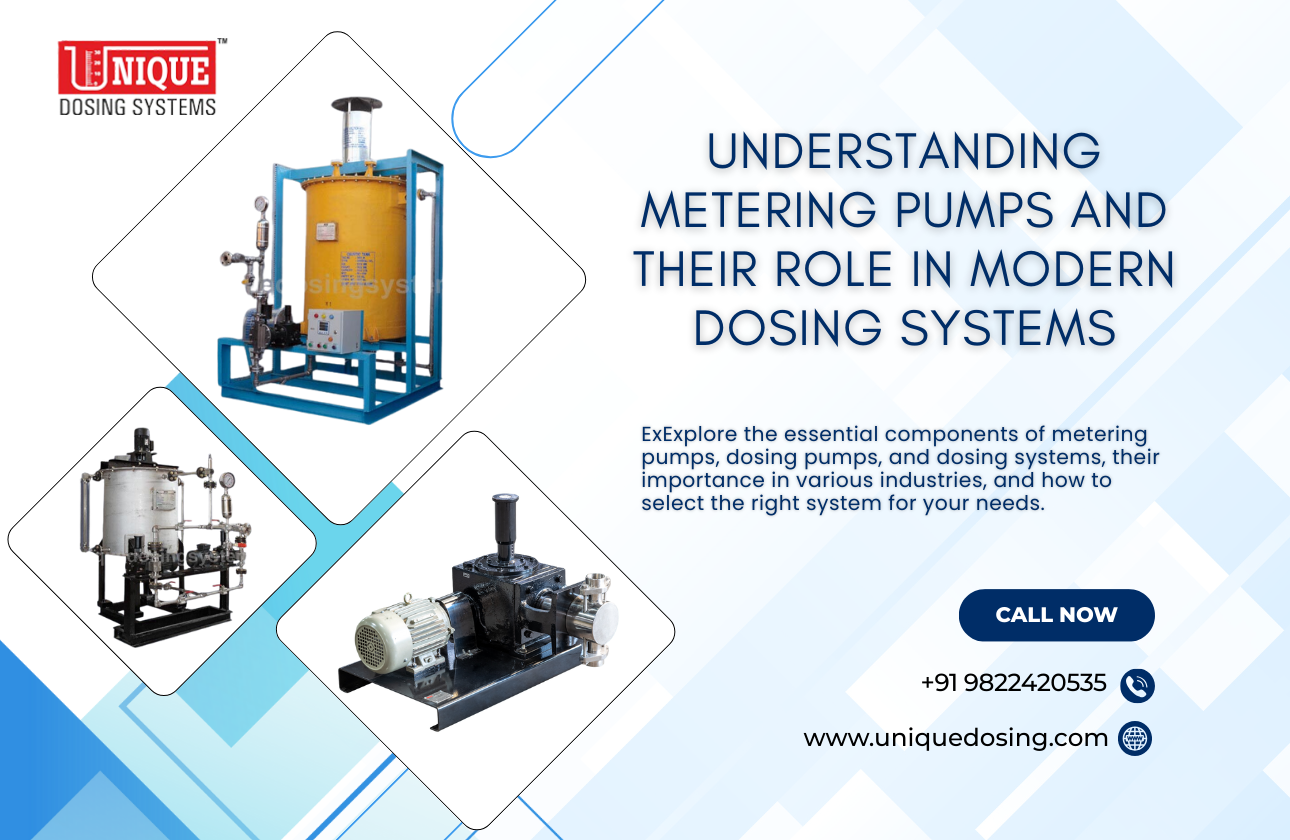
Understanding Metering Pumps and Their Role in Modern Dosing Systems
Metering pumps, also known as dosing pumps, play a critical role in industrial applications where precise liquid delivery is required. These pumps are essential components of dosing systems used across various sectors, including water treatment, pharmaceuticals, food processing, and chemical manufacturing. Let's delve into the workings of these pumps, their applications, and how to choose the best system for your requirements.
What is a Metering Pump?
A metering pump is a specialized pump designed to move a set volume of liquid over a specific period, providing accurate and consistent flow rates. This is crucial in processes where dosing precise quantities of a substance is necessary. Metering pumps feature adjustable flow rates, which can be manual or automated, ensuring flexibility and control over the pumping process.
Types of Dosing Pumps
The two primary types of metering pumps are:
- Diaphragm Pumps: Use a diaphragm, a flexible membrane, to move the liquid, ideal for handling corrosive and viscous substances.
- Piston Pumps: Employ pistons to displace liquid and are suitable for high-pressure applications.
Each of these pumps has distinct advantages, and selecting the right type depends on the specific needs of the application, such as the nature of the liquid, the required flow rate, and operating pressure.
Key Components of Dosing Systems
A dosing system typically consists of the following elements:
- Pumps: At the heart of the system, responsible for the accurate delivery of materials.
- Controllers: Regulate the flow rate and operation of the pumps, ensuring optimal performance.
- Pipes and Accessories: Conduct liquids throughout the system, often integrated with valves and connectors for precise flow control.
Applications of Metering Pumps
Metering and dosing pumps are indispensable in applications such as:
- Water Treatment: Used for chemical dosing to ensure water purity and safety.
- Pharmaceuticals: Enables accurate dosing of active ingredients in drug manufacturing.
- Food and Beverage: Necessary for adding flavors, colors, and preservatives precisely.
- Chemical Processing: Facilitates accurate chemical mixing and blending, essential for product consistency.
Choosing the Right Dosing System
When selecting a dosing system, consider these factors:
- Flow Rate Requirements: Ensure the system can deliver the necessary volume with precision.
- Chemical Properties: Understand the chemical compatibility of the materials involved.
- System Integration: Ensure seamless integration with existing plant controls and processes.
By considering these factors, businesses can optimize their processes, reduce waste, and improve the quality of their output.
Conclusion
Metering and dosing pumps are foundational to efficient dosing systems, offering precision and control across various industries. As technology advances and the demand for accuracy grows, these systems will continue to enhance productivity and ensure regulatory compliance. Remember to assess your specific needs and consult with experts to make the most informed decisions when implementing a dosing system.
Published on December 20, 2025 by Admin