
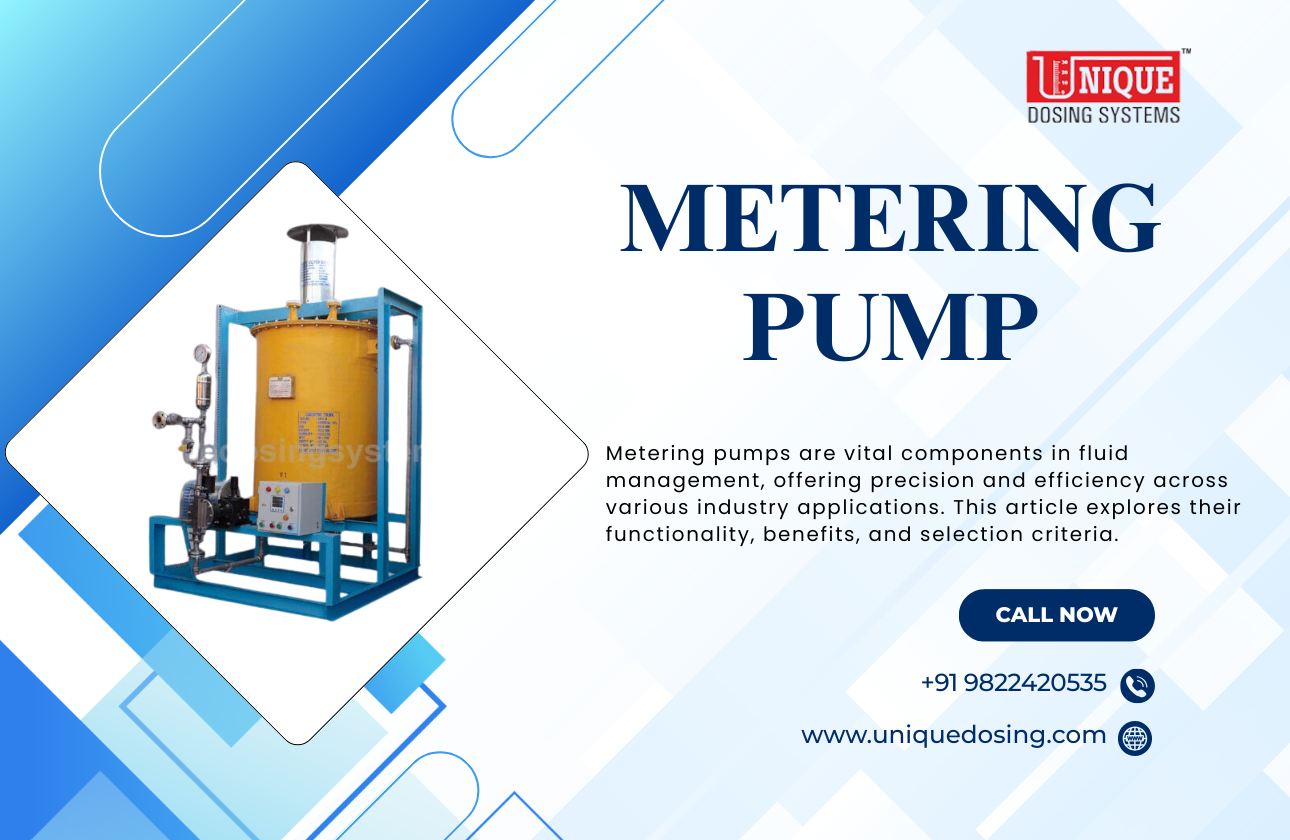
What is a Metering Pump?
A metering pump is a specialized pump used to control the flow of liquid at precise rates. Unlike typical pumps, metering pumps are designed to move a fixed volume of liquid, often delivering fluids precisely in industrial processes. This precision makes them essential in applications where exact amounts of a substance need to be dispensed.
How Does a Metering Pump Work?
Metering pumps operate by controlling the rate of flow through variable speed motor drives or adjustable stroke lengths. These pumps typically consist of a pump head, a motor, and a control system. The pump head contains a diaphragm, piston, or other mechanism to push the fluid. With features allowing for adjustment and control, metering pumps ensure fluids are dosed accurately, maintaining the desired application flow rate.
Applications of Metering Pumps
Metering pump are used in a wide array of industries, from chemical manufacturing to food processing and water treatment. They are particularly beneficial where precise dosing of liquids is crucial. For instance, in water treatment, metering pumps are used to add chemicals like chlorine accurately. Similarly, in the food industry, they ensure that ingredients are added in exact quantities to maintain quality and consistency.
Benefits of Using Metering Pumps
The primary advantage of metering pumps is their precision, which ensures that fluids are delivered accurately and consistently. This precision helps in reducing waste and improving the efficiency of processes. Moreover, metering pumps are known for their reliability, meaning they can function effectively over long periods without frequent maintenance. This durability results in lower operational costs and downtime.
Types of Metering Pumps
There are several types of metering pumps, including diaphragm pumps, piston pumps, and peristaltic pumps. Each type has its unique advantages. Diaphragm pumps are known for handling corrosive and abrasive liquids, while piston pumps are excellent for applications requiring high pressure. Peristaltic pumps are ideal for handling viscous fluids and biological solutions without contaminating them.
Choosing the Right Metering Pump
Selecting the right metering pump involves considering factors like the type of fluid being pumped, the required flow rate, and pressure. It's also essential to consider the chemical compatibility of pump materials. Consulting a detailed guide on dosing solutions can aid in making informed decisions tailored to specific applications.
Installation and Maintenance of Metering Pumps
Proper installation and maintenance are crucial for the effective performance of metering pumps. Ensuring the pump is mounted correctly and that the seals and valves are appropriately checked can prevent leaks and enhance efficiency. Regular maintenance includes inspecting components for wear and replacing them as needed, ensuring consistent and reliable operation.
Frequently Asked Questions
1. What is the difference between a metering pump and a dosing pump?
Answer: While both pumps are used for precise fluid control, a metering pump typically offers higher precision and is often used in applications requiring accurate dosing over longer periods.
2. How do I determine the right size for a metering pump?
Answer: The right size depends on several factors, including the required flow rate, pressure, and the type of fluid. It's crucial to consult product specifications and consider professional advice for the best fit.
3. What materials are metering pumps typically made from?
Answer: Metering pumps are made from various materials, including stainless steel, plastic, and exotic metals, depending on their application and the chemical compatibility requirements.
4. Can metering pumps handle corrosive materials?
Answer: Yes, many metering pumps are designed with materials suited for handling corrosive chemicals, such as certain plastics and stainless steel.
5. What are the common maintenance tasks for a metering pump?
Answer: Common tasks include checking seals and valves, inspecting diaphragms or pistons for wear, and ensuring the pump is free from clogs and blockages.