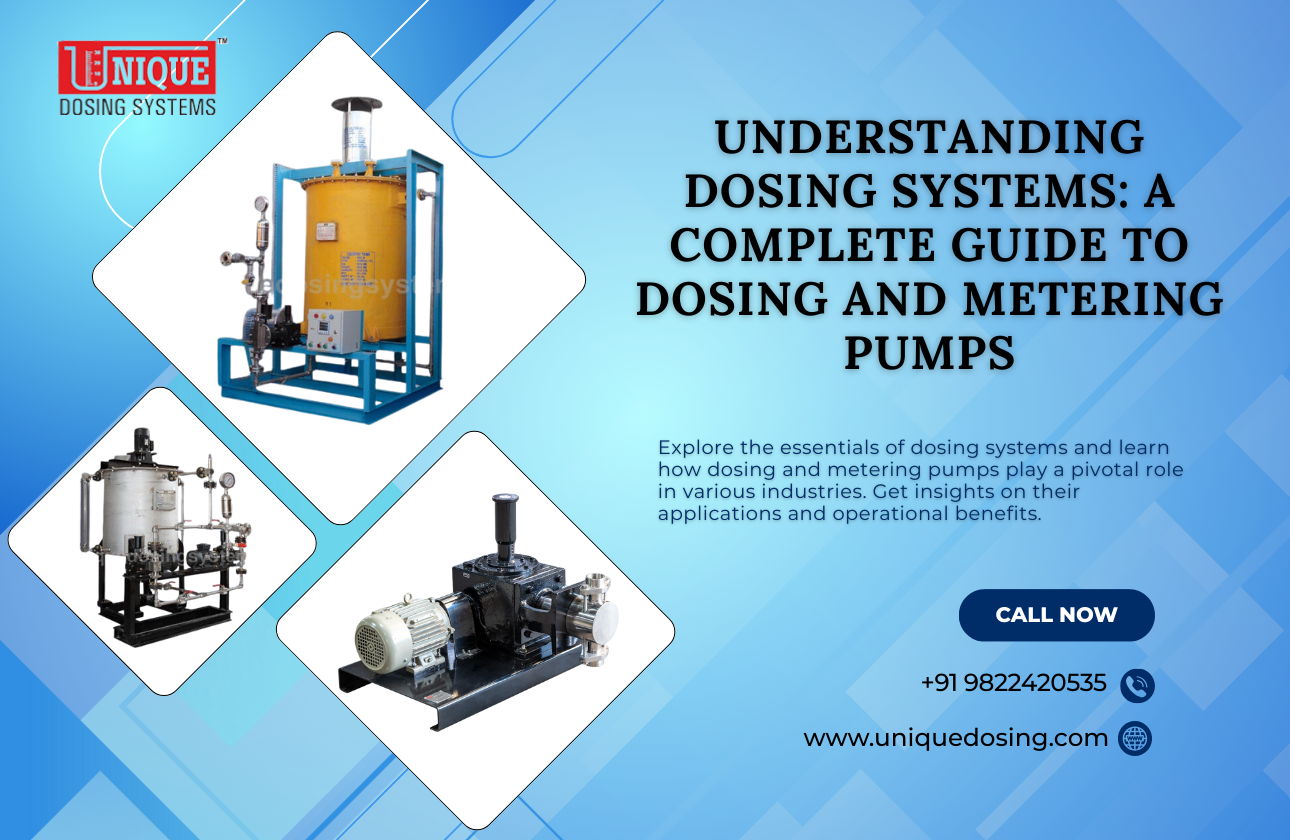
Understanding Dosing Systems: A Complete Guide to Dosing and Metering Pumps
Dosing systems are integral components across a wide range of industries, offering precision and efficiency in dispensing fluids. Whether it is in the water treatment industry, chemical manufacturing, or food processing, dosing and metering pumps are fundamental for achieving accurate chemical delivery. In this article, we delve into the essentials of dosing systems, focusing on the roles played by dosing pumps and metering pumps.
What are Dosing Systems?
Dosing system are engineered setups designed to dispense precise amounts of a substance into a process or mixture, typically fluids such as chemicals, dyes, or additives. These systems play a critical role in maintaining the accuracy and safety of various industrial operations, supporting sectors like water treatment, chemical manufacturing, pharmaceuticals, and food processing.
The Role of Dosing Pumps
Dosing pumps are at the heart of any dosing system. These pumps are programmed to move specific quantities of liquid within a precise timeframe. Their flexibility and precision make them valuable for operations that require consistent and repeatable dosing.
Dosing pumps are usually positive displacement pumps, which means they can deliver fluids regardless of pressure conditions, making them highly efficient and reliable. They are equipped with control mechanisms that allow for manual or automated dosing, providing versatility for a multitude of applications.
What Are Metering Pumps?
Metering pumps, a subset of dosing pumps, are specifically designed for the measured movement of fluid into a system. The key feature of metering pumps is their ability to adjust the flow rate with high precision, ensuring the exact amount of fluid is added at the required time.
These pumps are commonly used in applications where precise control over dosage and flow rate is critical. This includes scenarios such as the injection of chemicals for water treatment, blending ingredients in food production, and adding reagents in chemical processes.
Applications of Dosing and Metering Pumps
- Water Treatment: Dosing pumps are used to inject chlorine or other disinfectants to purify water.
- Chemical Manufacturing: Metering pumps facilitate exact chemical reactions by delivering specific reactants.
- Food and Beverage: These pumps ensure proper additive levels for flavoring, preservation, and coloring.
- Pharmaceuticals: Precision in dosing is crucial for the formulation and production of drugs.
Benefits of Using Dosing Systems
The integration of dosing and metering pumps in industrial processes offers numerous advantages:
- Accuracy: Guarantees precise dispersion of ingredients, minimizing waste and potential errors.
- Automation: Reduces human intervention, enhancing efficiency and safety.
- Versatility: Suitable for a wide range of viscosities and temperatures.
- Efficiency: Consistent operation reduces downtime and maintenance costs.
Conclusion
Dosing system, with their key components - dosing pumps and metering pumps, are indispensable in numerous industries. Their ability to provide precise and efficient fluid handling makes them a cornerstone for quality control and process optimization. As technology advances, these systems continue to evolve, offering even greater capabilities and efficiencies. Whether you are seeking consistent chemical dosing or precise product formulation, understanding and utilizing these systems can significantly enhance your operational outcomes.