
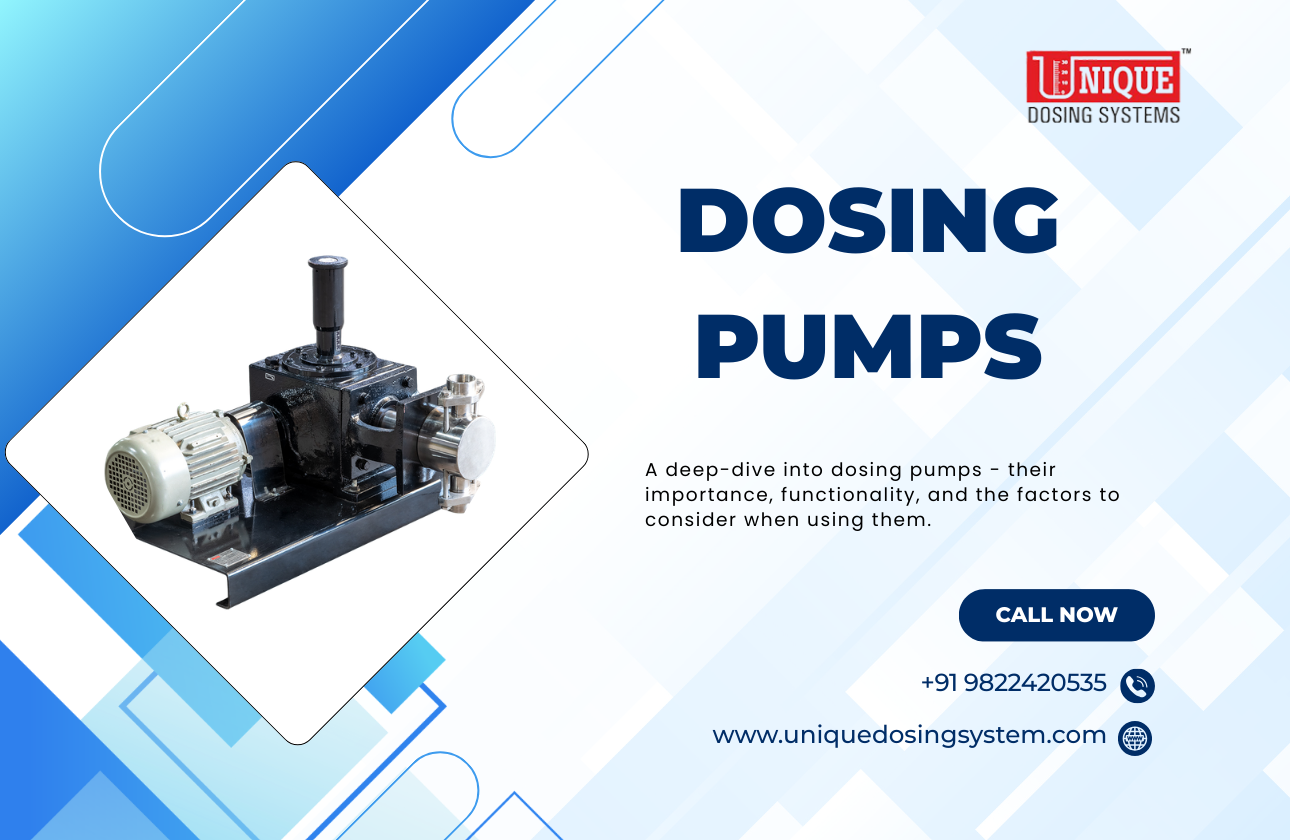
What Are Dosing Pumps?
Dosing pumps are small, positive displacement pumps designed to pump a very precise flow rate of a chemical or substance into water, steam, or gas flow. They are essential in scenarios where precise metering is crucial. These pumps ensure that the exact amount of substance is introduced into another fluid, often making them indispensable in industries like water treatment, food processing, and chemical manufacturing. Because they are precise, they help maintain the quality, efficiency, and safety of various industrial processes.
How Do Dosing Pumps Work?
The operation of dosing pumps involves drawing fluid into a chamber and then injecting it into the target location at a set speed and volume. The pumps are usually controlled by a digital system that ensures they dispense substances accurately, regardless of pressure or scale. This process helps maintain control over the dosing process and ensures that no excess of the chemical is added. Most modern dosing pumps are automatic, offering more compatibility with different industrial setups.
Applications of Dosing Pumps
Dosing pumps find applications in a variety of industries. They are commonly used in water treatment plants to control pH levels or purify water by adding disinfectants like chlorine. In the food industry, they help in flavor and ingredient mixing. Chemical industries use them for adding precise chemical volumes in developing and manufacturing processes. This widespread use across industries highlights the flexibility and importance of reliable dosing pumps in maintaining operational standards.
Types of Dosing Pumps
There are several types of dosing pumps, each suited to different tasks. These include diaphragm pumps, peristaltic pumps, and piston pumps. Diaphragm pumps, for example, use a diaphragm and valves on both ends of the chamber to pump fluids. Peristaltic pumps use rotating rollers to squeeze fluid through a tube. Piston pumps use a piston mechanism to push fluids. Understanding the specific uses of each type can drive effective fluid control in your operations.
Advantages of Using Dosing Pumps
The primary advantage of dosing pumps is their precision. By delivering a consistent and accurate dose of chemical, these pumps help maintain the quality and safety of the treated product. Additionally, their ability to operate automatically reduces the need for constant human supervision, thereby minimizing errors and saving labor costs. In essence, dosing pumps are a crucial part of high-quality operations in modern industrial environments.
Choosing the Right Dosing Pump
When choosing a dosing pump, consider factors like chemical compatibility, flow rates, and the pressure at which the pump will need to work. The pump should be appropriate for the substance it will handle and the conditions it will operate under. Use resources like the Choosing the Right Dosing Pumps guide to identify the best equipment for your needs and ensure that the choice aligns with efficiency requirements.
Maintenance and Troubleshooting
Dosing pumps, like any equipment, require regular maintenance to function properly over time. This includes checking for leaks, ensuring the pump has clean lines, and inspecting the valves for wear and tear. Addressing these issues as they arise will extend the life of the pump and ensure consistent performance. Troubleshooting any minor issues can prevent larger, costlier problems down the line.
Frequently Asked Questions
1. What industries use dosing pumps?
Answer: Dosing pumps are used in various industries, including water treatment, food processing, pharmaceuticals, and chemical manufacturing, due to their precision in fluid management.
2. Are dosing pumps difficult to maintain?
Answer: Regular maintenance is required for dosing pumps, but with routine checks and adjustments, they can be easy to maintain, extending their life and efficiency.
3. How can I ensure I'm choosing the correct dosing pump?
Answer: It's important to consider the chemical compatibility, flow rate, and operating pressure. Consulting expert guides can provide valuable insights.
4. What are the benefits of an automatic dosing pump system?
Answer: Automatic systems offer precise control, reduce labor costs, and are highly reliable in accurately administering the required chemical dosages.
5. Can dosing pumps handle all types of chemicals?
Answer: While many dosing pumps are versatile, it's crucial to ensure the materials used in the pump are compatible with the chemical being dosed to prevent corrosion or damage.