
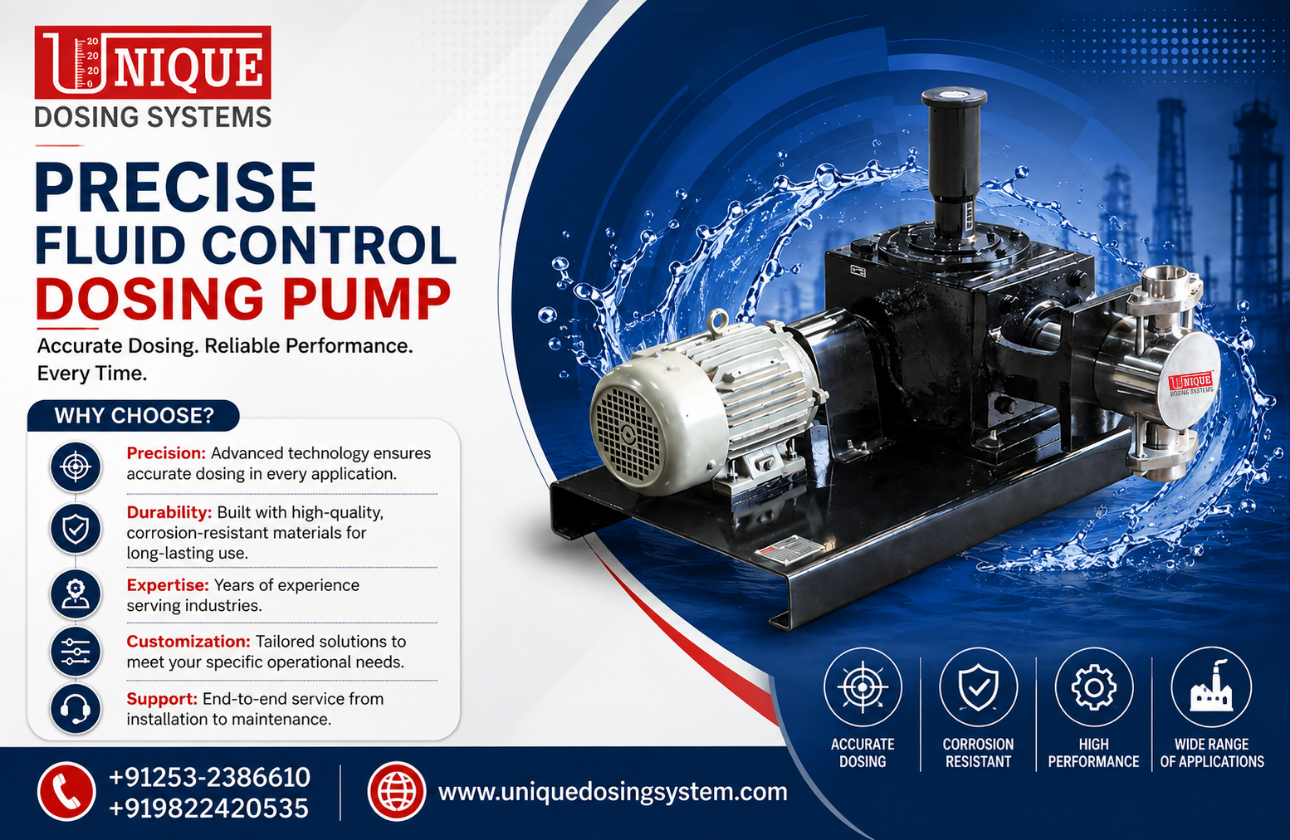
What Are Dosing Pumps?
Dosing pumps are essential tools used across various industries to inject a precise amount of liquid into a system. They're often used when accuracy is crucial, such as in water treatment, chemical processing, and food production. A dosing pump, at its core, is a small pump that's tasked with dispensing liquid at precise and controlled amounts. This precision helps industries ensure that the right amount of chemicals or nutrients are being used, which is vital for maintaining the quality of their products. The pumps are versatile, handling a range of fluids, from corrosive chemicals to viscous liquids and slurries. Understanding how these pumps function can help businesses choose the right one for their specific needs.
How Do Dosing Pumps Work?
The mechanism behind dosing pumps is quite straightforward. Most dosing pumps are positive displacement pumps. This means they push a fixed amount of fluid through the pump's chamber with each cycle. These cycles are usually powered by an electric motor or air actuator. It's this cycle that allows for such precise control over the volume of liquid dispensed. Many dosing systems incorporate advanced features like programmable controls and automation to further refine this precision. By setting the dosages accurately, companies have fewer miscues, which can reduce waste and save money in the long run.
Common Uses of Dosing Pumps
Dosing pumps have versatile applications across different sectors. In the water treatment industry, they ensure the delivery of precise chemical dosages needed for pH control, disinfection, and algae prevention. They're also heavily used in the agriculture sector for delivering nutrients and fertilizers in hydroponic systems. In the food and beverage industry, these pumps help maintain the accurate mixture of ingredients to ensure taste quality. Moreover, pharmaceuticals rely on dosing pumps for consistent medicine production, ensuring proper efficacy and safety. The dosage precision that these pumps offer is critical, which is why they're seen as indispensable in sectors where quality and accuracy cannot be compromised.
Benefits of Using Dosing Pumps
The benefits of dosing pumps extend beyond simple liquid dispensing. One of the most significant advantages is precision. Achieving accurate dosing reduces material costs and prevents damage that might occur due to over or under-dosing. Additionally, these pumps minimize human error, as they can be programmed and controlled easily. Their adaptability to handle various liquids—from thin solvents to thick slurries—makes them ideal for numerous applications, providing flexibility for industrial operations. Moreover, they're efficient and can significantly reduce the time required for manual labor, enhancing productivity.
Factors to Consider When Choosing Dosing Pumps
When selecting a dosing pump, there are several factors you need to consider. The first is the type of liquid being handled. Different pumps are designed to handle different types of fluids based on their viscosity and chemical composition. It's also crucial to consider the required flow rate, pressure, and the environment in which the pump will operate. Cost is another factor, though it's vital to weigh this against the performance and reliability of the pump. Reading guides like this one can provide insights into choosing reliable manufacturers, which is crucial for ensuring long-term operational efficiency.
Maintenance and Care for Dosing Pumps
Regular maintenance and proper care can extend the life of dosing pumps and keep them running smoothly. Routine checks should be conducted to identify wear and tear. This can prevent failures and reduce downtime in operations. Cleaning is another crucial part of maintenance; it helps to avoid clogs and other operational hitches that might arise from contamination. Replacing worn-out parts, like seals and diaphragms, should also be part of maintenance routines. As technology evolves, following up with the latest dosing pump innovations can enhance this maintenance by incorporating self-checks and automation.
Challenges in Using Dosing Pumps
While dosing pumps are beneficial, they come with their challenges. Setup can be complex for those unfamiliar with pump systems. Automated systems require precise calibration, which can be a drawback for small businesses without in-house expertise. Likewise, initial costs for high-quality pumps can be substantial, although this is often offset by the long-term savings in material costs and operational efficiency. Learning about dosing and metering systems can mitigate these challenges by ensuring that the most efficient systems are in place, tailored to specific operational needs.
Future of Dosing Pumps
The future of dosing pumps looks promising with the advent of smart technologies. These smart systems integrate IoT (Internet of Things) capabilities, allowing for remote monitoring and control, which can increase efficiency and reliability. Furthermore, advancements in materials are making pumps more durable and resistant to corrosion, which is critical for handling harsh chemicals. The evolution of skid-mounted dosing systems is another area that's garnering attention, offering pre-engineered solutions for a more efficient setup in industries. As these technologies develop, they promise to make dosing pumps more versatile and energy-efficient, continuing to drive innovation across various fields.
Frequently Asked Questions
1. What are the primary uses of dosing pumps?
Answer: Dosing pumps are primarily used in industries that require precise liquid dosages, such as water treatment, agriculture, food and beverage production, and pharmaceuticals. They ensure exact quantities are used to maintain product quality and efficiency.
2. How often should dosing pumps be maintained?
Answer: Dosing pumps generally require regular maintenance, including routine checks and cleaning, to ensure longevity and prevent operational failures. Specific maintenance schedules can vary based on the pump model and application intensity.
3. Can dosing pumps handle all types of liquids?
Answer: While versatile, dosing pumps vary in their capabilities based on design. Some are better suited for thin fluids, while others can handle viscous or corrosive substances. Choosing the right pump depends on the fluid's properties.
4. Do dosing pumps require a lot of calibrations?
Answer: Yes, especially those used in automated systems. Proper calibration ensures accuracy in dosage, which is crucial for operations requiring precise measurements. Calibration needs will depend on the pump's application and frequency of use.
5. What advancements are expected in dosing pump technology?
Answer: Advancements include the incorporation of IoT for remote monitoring, improved materials for durability against corrosive fluids, and more efficient energy use, which are all expected to enhance the functionality and scope of dosing pumps further.